
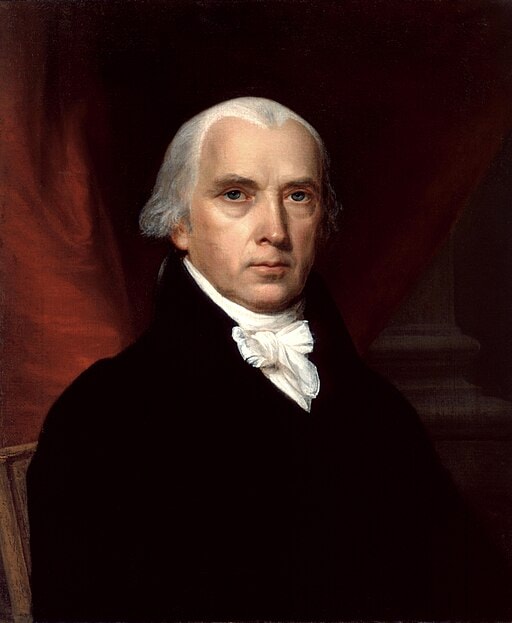
James Madison was the fourth President of the United States. He was the Father of the Constitution and the principal author of the Bill of Rights. He said:
“In the former sense, a man’s land, or merchandise, or money is called his property. In the latter sense, a man has a property in his opinions and the free communication of them. He has a property of peculiar value in his religious opinions, and in the profession and practice dictated by them.
“He has a property very dear to him in the safety and liberty of his person. He has an equal property in the free use of his faculties and free choice of the objects on which to employ them.”
“In a word, as a man is said to have a right to his property, he may be equally said to have a property in his rights. Where an excess of power prevails, property of no sort is duly respected. No man is safe in his opinions, his person, his faculties, or his possessions.”
“Government is instituted to protect property of every sort; as well that which lies in the various rights of individuals, as that which the term particularly expresses. This being the end of government, that alone is a just government, which impartially secures to every man, whatever is his own.”
“A just security to property is not afforded by that government, under which unequal taxes oppress one species of property and reward another species.”